Common Challenges, Collective Action: Pakistan’s Experience and Lessons for Poverty Reduction
Navid Ahmed Shaikh
Vice-Chair, Committee of the Global Partnership for Poverty Alleviation and Development (GPPAD)
Secretary, Ministry of Poverty Alleviation & Social Safety, Government of Pakistan
A world free from poverty is a shared aspiration of humanity. Yet poverty remains one of the most enduring challenges confronting various countries across regions and levels of development. Poverty is not inevitable, nor do people living in poverty lack talent, potential or the aspiration to build better lives. What is often missing are the opportunities, resources and enabling conditions needed to turn that potential into sustained progress.
Poverty is not therefore a matter of income alone. Poverty is inherently multidimensional in nature, encompassing deprivation in housing, food, education, health care, productive assets, access to finance and decent employment, and vulnerability to economic, social, and climate-related shocks. Addressing these interconnected dimensions makes poverty reduction a broad national development objective, requiring a whole-of-government approach across institutions, sectors, and levels of government. At the same time, the scale and complexity of the challenge emphasize the significance of international cooperation. Sustained national commitment remains critical, while countries can accelerate progress by sharing knowledge and experience, mobilizing resources and technology, strengthening institutions, and adapting proven solutions to their own circumstances.
The experience of countries across the Global South shows that sustained development, investment in human capital, social protection, economic opportunity, and resilience can create pathways out of poverty. China provides a particularly important experience at scale. Over the past four decades, nearly three-quarters of the world’s reduction in extreme poverty has been driven by nearly 800 million people lifted out of poverty in China, as measured by the World Bank’s international extreme poverty line[1].Lessons from a different development context can be drawn from Pakistan’s own experience with expanding social protection and advancing poverty graduation. The value of these experiences is not in replicating any single model, but in understanding what has worked, what can be adapted to different contexts and how evidence and experience can be translated into practical cooperation and scalable approaches.The International Day for the Eradication of Poverty, observed on 17 October, is an opportunity to recommit ourselves to a world where everyone can live with dignity, security, and opportunity.
The United Nations three-year global theme for 2026–2028, “United for Peace and Human Rights”, places poverty eradication within the framework of creating peaceful, just, and inclusive societies. The United Nations campaign reminds us that lasting peace is more than the absence of conflict; it is based on social justice and bolstered by effective social protection, inclusion, and meaningful participation, ensuring that no one is left behind. The 2026 focus, “Safe Homes for All,” also reminds us that more than 2.8 billion people globally lack adequate housing—conditions that undermine personal security and deepen vulnerability to poverty[2]. Adequate, safe, and secure housing is not only about shelter, but also a platform for dignity, health, education, livelihoods, and meaningful participation in economic and social life. In Pakistan, “Safe Homes for All” is an urgent demand. Millions live in informal settlements (katchi abadis) in substandard housing and insecure living conditions[3].The 2022 floods displaced 33 million people and damaged or destroyed almost 2.2 million homes[4] while the 2025 floods displaced about 6.9 million people and damaged or destroyed 230,000 homes[5]. The repeated nature of these challenges highlights the need for safe, climate resilient housing and enhanced social protection to keep vulnerable households from sinking further into poverty.
The scale of the global challenge continues to be enormous. According to the United Nations Sustainable Development Goals Report 2026, an estimated 826 million people—around one in ten people worldwide—remain in extreme poverty, living on less than US$3.00 a day in 2021 purchasing power parity[6]. Progress toward ending extreme poverty has stalled, revealing the need for stronger social protection, inclusive economic opportunities, and targeted investment in people experiencing persistent and intersecting disadvantages. To achieve SDG 1—to end poverty in all its forms every place by 2030—the world will need to step up and sustain its actions.
The problem of present-day poverty calls for a multifaceted approach, which will include sustainable economic development and decent work, provision of social security, investment into human resources and infrastructure, creating opportunities for youth and women, effective inclusion, climate resilience, and capable institutions. No single country or institution can deliver all these solutions alone. Countries can, however, accelerate progress by learning from one another, adapting approaches that have demonstrated results, mobilizing knowledge, resources and technology, and developing new responses to shared challenges. This is where international cooperation assumes particular importance.
Led by China and jointly initiated by 54 countries and nine international organizations, the Global Partnership for Poverty Alleviation and Development (GPPAD) provides a platform for this purpose[7]. Established in Beijing in May 2026, GPPAD brings together a broad and diverse membership committed to strengthening cooperation on poverty alleviation and development. At its inaugural Committee meeting, members adopted the GPPAD Charter and Three-Year Action Plan 2026–2028, while senior representatives from Côte d’Ivoire, Brazil, Indonesia, Pakistan, South Africa, Uzbekistan, and the United Nations Development Program were elected as Vice-Chairs[8]. The meeting also drew on China’s experience in poverty alleviation and highlighted early initiatives, including the GPPAD Youth Action Initiative, laying a foundation for sustained exchange, mutual learning, and practical cooperation among members.
GPPAD's importance is in its capacity to convert development experience into concrete cooperation. By bringing member countries and international organizations together, GPPAD can foster peer learning, show solutions with proven results, and adapt them to national situations. For Pakistan, as a founder and Vice Chair, this engagement offers both honor and responsibility. Pakistan can share experience in social protection, socioeconomic targeting and dynamic registries, digital payments, poverty graduation, community-based development, disaster response, and climate resilience and learn from the experience, knowledge, and innovations of other countries that are members of the alliance.
The experiences of different countries have demonstrated a significant truth: poverty alleviation is not a single event or an end goal that can simply be accomplished and left behind. Households that move out of poverty can fall back when faced with economic downturns, illness, loss of employment, indebtedness, disasters, and other shocks. Sustainable poverty reduction therefore requires more than helping people cross a poverty threshold; it requires building resilience, protecting gains already achieved and creating opportunities for households to sustain and build on their progress. Recognizing the dynamic nature of poverty, China’s 15th Five-Year Plan (2026–2030) places emphasis on consolidating the gains of poverty alleviation and preventing vulnerable households from falling back into poverty[9]. Learning from past experiences, Pakistan is likewise strengthening resilience to climate-related and other shocks, while seeking to sustain progress against poverty and create pathways towards more secure and sustainable livelihoods.
Rooted in the 1978 Buenos Aires Plan of Action (BAPA)[10], South-South cooperation has gained renewed relevance as developing countries face shared challenges, including fiscal constraints, debt burdens, informal employment, infrastructure and digital gaps, climate vulnerability, and limited access to finance and technology. These common challenges underscore the importance of stronger cooperation to share knowledge, strengthen institutions, expand economic opportunities, and build resilience for more inclusive and sustainable development.
South-South cooperation is particularly valuable because developing countries often possess practical experience, institutional knowledge and policy innovations that are directly relevant to one another. China’s experience demonstrates what can be achieved when poverty reduction is pursued at scale through strengthening institutions, sustained & integrated development, investment in people, economic opportunity, and targeted support. Brazil’s Bolsa Família and Cadastro Único demonstrate how large-scale social protection can be supported by an integrated social registry, while Pakistan’s National Socio-Economic Registry (NSER) offers experience in building a national platform for targeting and expanding social protection. Bangladesh’s BRAC Graduation approach illustrates how an integrated package of social assistance, productive assets, skills, finance, and coaching can serve as a pathway to sustainable livelihoods and self-reliance. Ethiopia’s Productive Safety Net Program (PSNP), together with the experiences of Indonesia and the Philippines in shock-responsive social protection and disaster resilience, provides further lessons on protecting vulnerable households against climate, food-security, and other shocks.
The purpose is not to reproduce programs mechanically, but to draw core lessons from their underlying experience and principles, to adapt them to a given context and enrich them based on their application and subsequent analysis of the results. South-South cooperation can be enhanced through triangular cooperation in which the knowledge and know-how of developing countries are combined with the financial power, technologies and technical expertise of developed countries and multilateral organizations. This approach views developing countries as sources of innovative solutions, not only as beneficiaries of external aid.
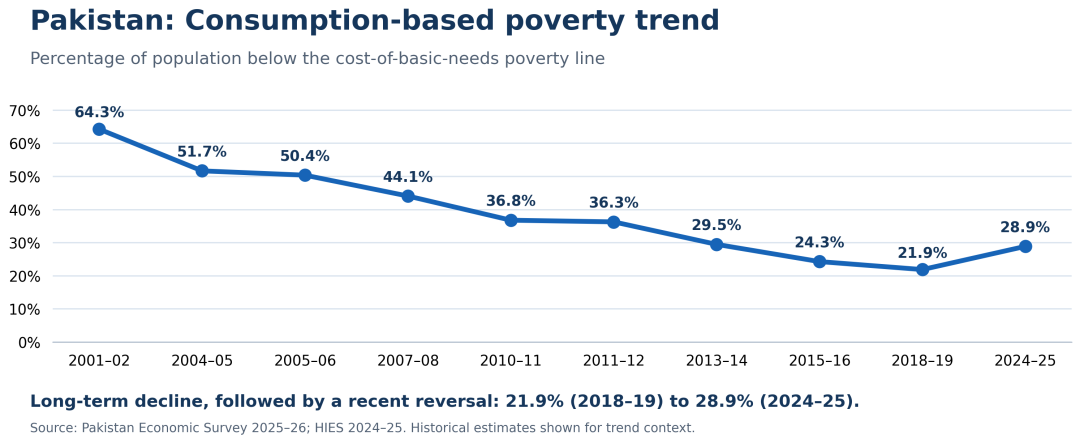
Pakistan’s poverty alleviation trajectory presents a mixed picture of progress and setbacks, according to the Pakistan Economic Survey 2025–26. The percentage of the population living below the cost of basic needs (CBN) threshold decreased from 64.3 percent during 2001–02 to 21.9 percent in 2018–19 but increased to 28.9 percent in 2024–25. Rural areas recorded a higher poverty rate of 36.2 percent against 17.4 percent in urban centers. The decline in poverty was stalled by the 2010 floods, while the COVID-19 pandemic, 2022 floods, slow economic growth, burgeoning population, depreciation of the local currency, and soaring inflation in 2022–23 added to the woes of millions of Pakistanis.
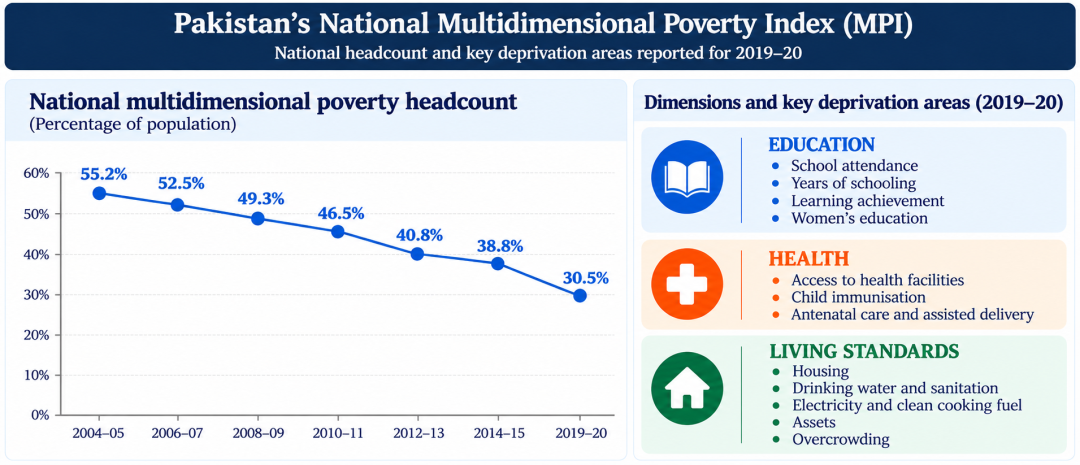
Pakistan’s consumption-based (CBN) poverty using the Household Integrated Economic Survey (HIES) estimates are complemented by the national Multidimensional Poverty Index (MPI) which uses Pakistan Social and Living Standards Measurement (PSLM) survey captures overlapping deprivations in education, health and living standards. According to the 2024 National MPI Report based on PSLM 2019-20, multidimensional poverty declined from 55.2% in 2004–05 to 30.5% in 2019–20. There is a huge disparity between rural and urban populations. The multidimensional poverty affected 41.9 per cent of the rural population, compared with 10.5 per cent of the urban population. Multidimensional poverty is lowest in Punjab wit 19 per cent and highest in Balochistan reaching 60.2 per cent. These disparities underscore the need to complement income-poverty reduction efforts with sustained investment in education, healthcare, housing, basic services, livelihoods and social protection, particularly in rural and underserved areas.
At the heart of Pakistan’s social protection system is the Benazir Income Support Programme (BISP), first launched in 2008. With the allocation of PKR 838 billion (approximately USD 3.1 billion), the program covers about 10.2 million families or a quarter of the population through various forms of unconditional cash transfers. The Benazir Kafaalat supports consumption smoothing for the poorest of the poor, while the Benazir Taleemi Wazaif, launched in 2012, makes cash payments conditional on children’s school attendance and has benefited 13.6 million children. Meanwhile, the Benazir Nashonuma provides nutritious food supplements to 2.1 million people[11]. Evidence demonstrates the impact of these interventions: a 2016 evaluation found that Taleemi Wazaif increased school enrolment among children aged 5–12 by 10 percentage points compared with similar children in non-program districts in first four years of initiative[12], while an evaluation of Nashonuma found that enrolled children were 20 to 22 percent less likely to be stunted at six months of age[13]. By protecting household consumption while promoting education, improving nutrition and strengthening human capital, these programs help break the intergenerational cycle of poverty.
BISP has evolved beyond income support into a broader, shock-responsive social protection platform. Supported by the National Socio-Economic Registry (NSER), which covers approximately 90 percent of Pakistan’s population[14], and a dynamic registry that facilitates the identification and enrolment of newly eligible households, it provides an established foundation for shock response system in collaboration with disaster management agencies, government departments and other social protection entities. Its data, payment and delivery systems enable assistance to be scaled up during crises through vertical expansion for existing beneficiaries, horizontal expansion to newly affected households, and piggybacking on existing delivery mechanisms. Together with digital payments, financial inclusion, human capital development and links to livelihood and recovery programs, these capabilities help protect vulnerable households and strengthen their resilience to shocks[15].
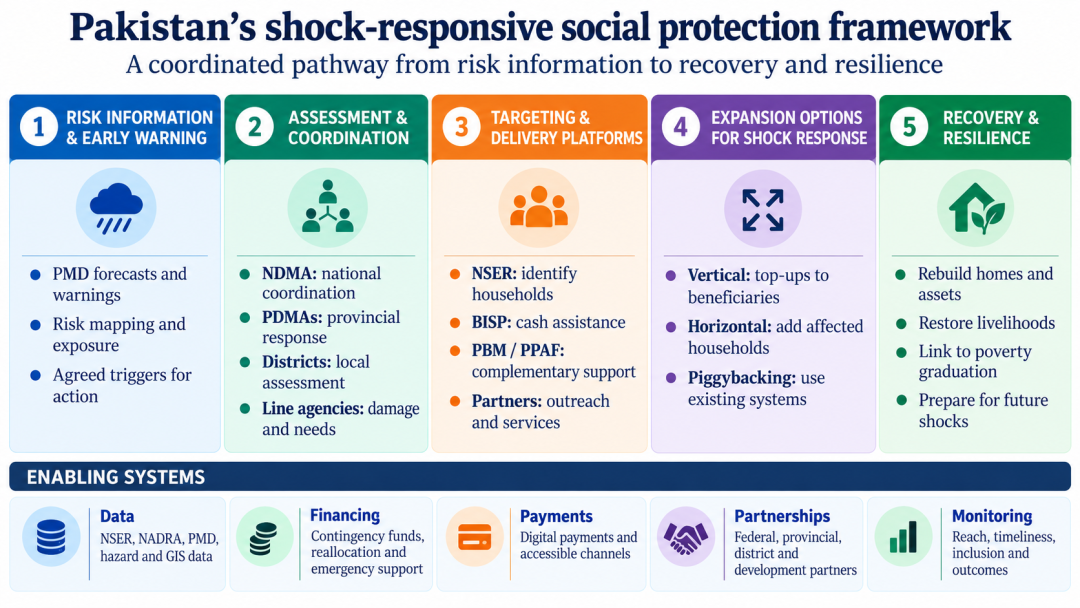
Pakistan’s experience during major crises demonstrates the value of this infrastructure. During the COVID-19 lockdown in 2020, the Ehsaas Emergency Cash programme combined the 8171 SMS service with NSER data and biometric verification to deliver about Rs 179 billion in one-off payments of Rs 12,000 per family within weeks, reaching roughly half of Pakistan’s population . Following the 2022 floods, BISP used the same delivery infrastructure to provide Rs 25,000 to each of around 2.7 million affected families, disbursing more than Rs 68 billion. These experiences demonstrate how investments in permanent social protection infrastructure can provide a foundation for rapid and scalable responses when shocks occur.
Pakistan Bait-ul-Mal (PBM), established in 1991 is a key social welfare organization providing targeted assistance to vulnerable and disadvantaged groups. It provides food and shelter to more than one million poor transit passengers and daily wagers annually, free medical treatment to deserving patients, including those suffering from life-threatening diseases, and specialized free treatment for thalassemia patients. Through 165 Women Empowerment Centers (WECs), PBM provides stipend & free vocational training to widows, orphans, and disadvantaged women to promote employment and self-reliance. It also operates 160 Schools for Rehabilitation of Child Labour (SRCLs), offering free primary education, books, uniforms, stipends, and healthcare to children withdrawn from hazardous Labour. Through Pakistan Sweet Homes, PBM provides orphaned children with accommodation, nutrition, education, and healthcare. It also supports ‘special friends’ (persons with special needs) through financial assistance and assistive devices. Collectively, these interventions combine immediate relief with healthcare, education, skills development, child protection, and disability inclusion, helping vulnerable individuals and families improve their wellbeing, dignity, and prospects for greater self-reliance[17].
Pakistan’s poverty graduation approach links social protection with pathways to sustainable livelihoods. Evolving from the Targeting the Ultra-Poor (TUP) model piloted by the Pakistan Poverty Alleviation Fund (PPAF) in 2008 in 65 villages, it combines social mobilization, productive assets, skills, interest-free finance, savings, enterprise development, and market linkages, with support tailored to households’ needs and capacities.
Pakistan’s graduation pathway provides a continuum of support, ranging from social assistance and human capital development for the most vulnerable to productive inclusion through skills development, productive assets, and livelihood support. As households strengthen their economic capacity, support can extend to interest-free finance, savings mobilization, and market linkages[16], followed by access to microfinance, formal financial services, and small and medium enterprise (SME) support. The ultimate objective is to enable households to achieve sustainable livelihoods and economic self-reliance, recognizing that graduation pathways, the pace of progress and the support required will vary according to household circumstances and capacities.
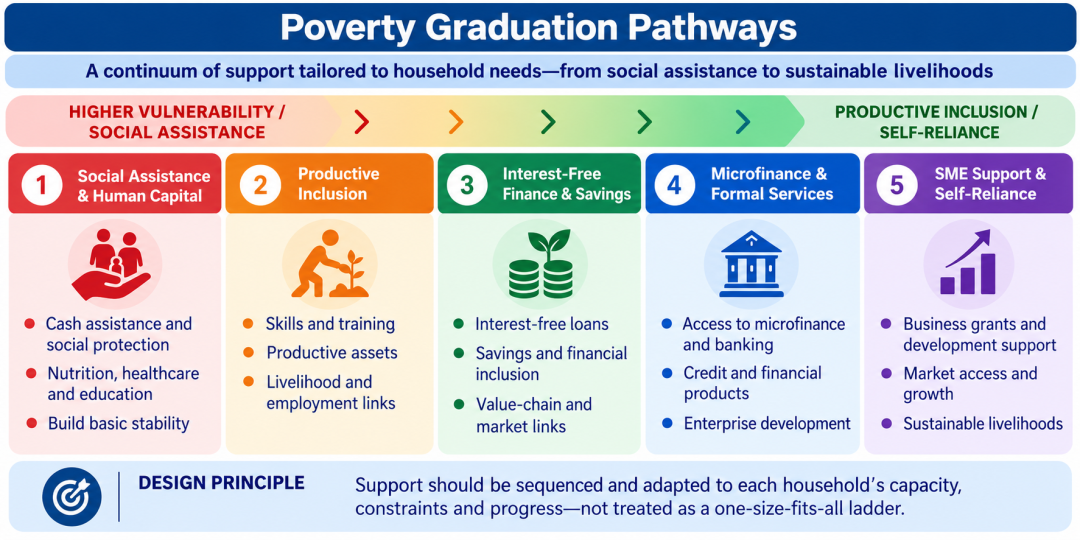
The National Poverty Graduation Program (NPGP), funded by IFAD and the Government of Pakistan, implemented this integrated approach for BISP beneficiary households in twenty-one of the country’s poorest districts from 2019 to 2025. Building on BISP’s cash assistance, the program provided a comprehensive package of productive asset transfers, interest-free loans, vocational and livelihood skills training, social mobilization, and community institution-building to strengthen household earning capacity and promote sustainable livelihoods and economic self-reliance. Overall, the program reached 370,567 households. The independent third-party endline assessment reported that 47 percent of households achieved an income increase of at least 30 percent, 179,000 new employment opportunities were created, 58 percent of households graduated from BISP’s unconditional cash transfer program, 73 percent adopted climate-smart practices, and 48 percent of women reported greater participation in household decision-making. These results illustrate the potential of combining social protection with productive support[18].
Mission 9—People’s Agenda: Social Protection and Poverty Graduation of the Uraan Pakistan (13th Five-Year) Plan envisages institutionalizing poverty graduation as a sustained national development approach, moving beyond standalone projects towards an integrated framework for economic empowerment, productive employment, and self-reliance. It emphasizes aligning federal and provincial programs, strengthening inter-agency coordination and sectoral convergence, and creating synergies among social protection, productive assets, skills development, interest-free finance, employment generation and market linkages. Building on the lessons of NPGP and the ongoing scale-up through PGEP, Mission 9 provides the broader policy framework to consolidate these interventions, reduce duplication and enable vulnerable households to progress from social assistance towards sustainable livelihoods and economic independence.
The promotion and development of Medium, Small and Medium Enterprises (MSMEs) play a vital role in reducing poverty as they create employment opportunities, expand self-employment, increase income levels, and allow low-income families to settle their own businesses. Over 5.2 million Small and Medium-sized Enterprises in Pakistan contribute to almost 40 percent of GDP and almost 78-80 percent of non-agricultural employment in the country. At the same time, access to credit, skills, technology, and markets presents a challenge to many enterprises. Increasing the income of these enterprises will require addressing a range of issues, including those affecting women, the youth, and other vulnerable groups, in isolated communities. For poverty reduction to be sustainable, social protection must therefore be complemented by policies and investments that enable poor and vulnerable households to establish, grow, and sustain productive enterprises[19].
Pakistan’s experience highlights the role of community organizations and community-led development in achieving inclusive and sustainable poverty reduction. Through the Pakistan Poverty Alleviation Fund (PPAF), over 2.67 million households have been organized through a grassroots network of more than 171,200 community institutions and 440,000 credit and common-interest groups. These organizations enable communities to identify local priorities, participate in planning, manage development initiatives, access finance, and strengthen livelihoods and resilience. By fostering local ownership, collective action, and accountability, they also help development programmes reach remote and underserved households. Pakistan’s experience demonstrates that communities are not merely beneficiaries of development; when organized and empowered, they become active partners in delivering and sustaining development outcomes[20].
Despite contributing a small share of global greenhouse emission, Pakistan ranks amongst the top ten most climate-vulnerable countries globally in the Global Climate Risk Index of different years. Its experience of successive super-floods in 2010, 2022, and 2025, besides droughts, heatwaves and other climate-induced hazards, is illustrative of the scale of this vulnerability. The floods of 2022 affected 33 million people, caused damage and economic losses worth over US$30 billion, and pushed 8.4-9.1 million people below the poverty line[21].The 2025 floods added to the recurring disaster shocks, resulting in the destruction of homes, disruption to physical infrastructure and livelihoods. Such catastrophic events are likely to have adverse distributional consequences on poor households, which are vulnerable to transitory income losses due to lack of resources and any form of shock absorption capacity and undermine their capacity to graduate from poverty.
For Pakistan, building climate-resilience is an essential prerequisite to accelerating poverty reduction. This entails pro-poor social protection, with timely response and support in the form of early-warning systems, assistance in restoring livelihoods and homes as well as productive assets. Other interventions that fit into this framework include the promoting of mangrove restoration and community-based adaptation with Delta Blue Carbon in the Indus Delta that supports coastal communities, the provision of alternative housing through the Sindh People’s Housing for Flood Affectees Programme, and the improvement of early warning systems and protective infrastructure to build resilience to glacial lake outburst floods in the mountainous climate vulnerable areas of Gilgit-Baltistan and Khyber Pakhtunkhwa under GLOF-II. Along with enhancing livelihood opportunities and promoting climate-resilient infrastructure and community-based adaptation, these measures will cushion households from the frequent and recurring climate shocks and enable them to graduate from poverty.
Women and the youth are important groups in Pakistan’s pro-poor growth and development agenda. As per Economic Survey of Pakistan 2025-26, Women’s Labour-force Participation Rate (FLPR) is low at 24 percent against 80.1 percent for men. Mission 9, Uraan Pakistan targets to increase women’s LPR by 17 percent by 2029. Young people between the ages of 15-29 make up 26.5 percent (67 million) of Pakistan’s population. This demographic dividend needs to be harnessed through investments in skills, enterprise development, digital literacy, and youth employment to accelerate broad-based poverty reduction and sustainable development. In Pakistan’s context, addressing the issue of youth unemployment and enhancing their employability through investment in education and skills has the potential to trigger immediate and long-term social and economic development gains. These demographic and developmental challenges provide fertile ground for regional knowledge exchange on scaling up women’s economic participation and youth engagement for increased productivity and poverty reduction[22].
While social assistance, housing and health protection are important channels for reducing poverty and protecting vulnerable households from falling into poverty, there is a need for addressing the multiple deprivations of such households through cash and non-cash transfers. Prime Minister’s concessionary housing loans for ‘Wazir-e-Azam Apna Ghar Program’ targets to tap into and leverage the home ownership potential to provide affordable housing finance to eligible borrowers thus contributing to economic growth, job generation, reduction in urban congestion and improvement in living standards. Similarly, the Prime Minister’s Health Card Programme aims to provide cashless hospitalization and treatment to needy families to reduce the risk of slipping into poverty. By focusing on durable livelihoods and community-based services, these initiatives seek to build resilience and protect families from the financial risks of illness, old age, and economic shocks.
Poverty reduction strategies across developing countries face the challenge of limited fiscal space due to rising debt servicing costs, economic volatility, and the need for increased investments in several sectors to promote growth and transform societies. As such, development partners have an opportunity to contribute to and enhance the impact of poverty reduction interventions through concessional financing, technical assistance, technology transfer, institutional strengthening, risk management, and private sector partnerships.
The adoption of the GPPAD Three-Year Action Plan 2026–2028 provides a foundation for turning the Partnership’s vision into practical cooperation. Its value can lie in peer-to-peer learning, technical cooperation, capacity development, and practical partnerships around common development challenges. Potential areas include poverty measurement and socioeconomic registries; digital delivery of social protection; shock-responsive social protection; poverty graduation and productive inclusion; rural livelihoods and agricultural productivity; community-driven development; women’s economic empowerment; youth skills and employment; climate-resilient infrastructure and livelihoods; innovative development financing; and monitoring and evaluation. The emphasis should be on evidence and implementation—discussing not only what worked, but also what did not, what it cost, what institutional arrangements were required and what adaptations were necessary.
Pakistan is honored to serve as one of the Vice-Chairs of the GPPAD Committee. This responsibility provides an opportunity to contribute to the Partnership’s practical agenda while learning from partners. Pakistan can share experience in BISP and NSER, digital delivery of social protection, poverty graduation, community institutions, interest-free finance, disaster response, and climate-resilient housing and livelihoods.
The global poverty challenge is too large and complex for any country or institution to address alone. Yet the experience of recent decades demonstrates that major progress is possible. The task before GPPAD is to connect diverse experiences and turn them into practical cooperation—helping countries adapt what works, understand what does not and develop solutions suited to their own circumstances.
The most valuable form of international cooperation is ultimately one that reaches people and changes lives: a farmer gaining access to a productive asset and a market; a woman opening her first secure financial account; a child remaining in school because a household has adequate support; a family rebuilding a climate-resilient home; a young person acquiring a skill that leads to employment; or a vulnerable household receiving timely assistance before a shock pushes it deeper into poverty. Development cooperation shall therefore be based on partnership instead of hierarchy, mutual learning instead of one-way transfer of knowledge, and on the importance of practice instead of mere declarations.
Poverty eradication needs to be tackled by more than one country, one organization or one generation. It is a shared human endeavor. GPPAD provides the platform to bundle the experiences, knowledge and determination of member countries who have undertaken the shared endeavor. Pakistan, as Vice-Chair, stands ready to contribute its experience, learn from its partners and work with all members on a shared platform to fight deprivation. Our goal should be a world where every person can live in dignity and security, with hope, and without poverty.
[1].World Bank and Development Research Center of the State Council, P.R. China, Four Decades of Poverty Reduction in China: Drivers, Insights for the World, and the Way Ahead (Washington, DC: World Bank, 2022), https://openknowledge.worldbank.org/server/api/core/bitstreams/e9a5bc3c-718d-57d8-9558-ce325407f737/content; World Bank press release, 1 April 2022.
[2].UN-Habitat estimates, as reported in United Nations Department of Economic and Social Affairs, “Around 300 million People Are Homeless Worldwide, and Nearly 2.8 billion Lack Adequate Housing,” 2025, https://social.desa.un.org/world-summit-2025/blog/300million-people-homeless-worldwide.
[3].UN-Habitat, “Urbanization in Pakistan: Building inclusive and sustainable cities,” https://unhabitat.org/pakistan
[4].Government of Pakistan, Asian Development Bank, European Union, United Nations Development Programme and World Bank, Pakistan Floods 2022: Post-Disaster Needs Assessment (October 2022); see also UN OCHA, Pakistan 2022 Monsoon Floods Situation Report No. 10 (28 October 2022), reporting more than 2.1 million houses damaged or destroyed.
[5].UN OCHA, Pakistan 2025 Monsoon Floods: Support Plan for Relief and Early Recovery (October 2025 – April 2026), citing National Disaster Management Authority data (over 6.9 million people affected; over 229,700 houses damaged or destroyed), https://www.unocha.org/publications/report/pakistan/pakistan-2025-monsoon-floods-support-plan-relief-and-early-recovery-october-2025-april-2026.
[6].United Nations, International Day for the Eradication of Poverty, 17 October 2026 (2026 focus: “Safe Homes for All”), https://www.un.org/en/observances/day-for-eradicating-poverty. ).
[7].Ministry of Agriculture and Rural Affairs, People’s Republic of China, “Global Partnership for Poverty Alleviation and Development Holds First Committee Meeting,” 27 May 2026, https://english.moa.gov.cn/news_522/202606/t20260601_301609.html.
[8].Ibid
[9].Xinhua, “China Focus: China’s sustained poverty reduction efforts offer global experience,” 29 May 2026, https://eng.yidaiyilu.gov.cn/p/09KK8JL6.html.
[10].United Nations General Assembly, Resolution 33/134 of 19 December 1978, endorsing the Buenos Aires Plan of Action for Promoting and Implementing Technical Cooperation among Developing Countries.
[11].Government of Pakistan, Finance Division, Pakistan Economic Survey 2025–26, Chapter 16; Benazir Income Support Programme, official programme
[12].Iftikhar Cheema et al., Benazir Income Support Programme: Evaluation of the Waseela-e-Taleem Conditional Cash Transfer (Oxford: Oxford Policy Management, July 2016), - https://www.opml.co.uk/files/Publications/7328-evaluating-pakistans-flagship-social-protection-programme-bisp/bisp-evaluation-wet-cash-transfer.pdf.
[13]. Aga Khan University, endline impact evaluation of the Benazir Nashonuma Programme, as reported in “Benazir programme cuts child stunting rates: study,” Dawn, 8 May 2026, https://www.dawn.com/news/1998545; see also World Food Programme, 2 December 2025, https://www.wfp.org/news/strengthening-social-protection-nutrition-governments-and-wfp-gather-pakistan-global-learning.
[14].Benazir Income Support Programme, National Socio-Economic Registry data (2026), as reported by the Ministry of Poverty Alleviation and Social Safety.
[15].Thomas Bowen et al., Adaptive Social Protection: Building Resilience to Shocks (Washington, DC: World Bank, 2020), https://documents1.worldbank.org/curated/en/579641590038388922/pdf/Adaptive-Social-Protection-Building-Resilience-to-Shocks.pdf.
[16].Government of Pakistan, Ehsaas Emergency Cash: A Digital Solution to Protect the Vulnerable in Pakistan during the COVID-19 Crisis (Islamabad, December 2020).
[17].Pakistan Bait ul Mall (PBM). https://www.pbm.gov.pk/
[18].Ministry of Poverty Alleviation and Social Safety. (2019-2025). National Poverty Graduation Program (NPGP). End Line Report.
[19].Pakistan’s SMEs make up around 90 per cent of enterprises and contribute close to 40 per cent of GDP, about 25–30 per cent of exports and 78–80 per cent of non-agricultural employment; SMEDA was established in 1998 under the Ministry of Industries & Production. Source: Small and Medium Enterprises Development Authority, https://smeda.org.
[20].Pakistan Poverty Alleviation Fund (PPAF) . https://www.ppaf.org.pk/
[21].Government of Pakistan, Asian Development Bank, European Union, United Nations Development Programme and World Bank, Pakistan Floods 2022: Post-Disaster Needs Assessment (October 2022); UNDP Pakistan press release, https://www.undp.org/pakistan/press-releases/pdna-pakistan-floods.
[22].Government of Pakistan, Finance Division, Pakistan Economic Survey 2025–26, Chapter 12: Population, section 12.1-a, https://www.finance.gov.pk/survey/chapter_26/12_Population.pdf.
