From September 3 to 16, 2026, the "Seminar on Urban-Rural Integrated Development and Poverty Reduction for Developing Countries" hosted by the International Poverty Reduction Center in China (hereinafter referred to as IPRCC), was successfully held in Beijing and Guangxi Zhuang Autonomous Region. The 14-day seminar brought together 25 officials from 8 countries including Kenya, Zambia, South Africa, Kiribati, Benin, Cabo Verde, Egypt and Palestine. Ms. Jie Ping, Deputy Director General of the IPRCC, attended both the opening and closing ceremonies and delivered speeches. Ms. IBRAHIM SAWSAN HOSNY HAFEZ, Member of Parliament, House of Representatives from Egypt, and Ms. CHELULE LIZA CHEPKORIR, Assembly Member, National Parliament from Kenya, spoke on behalf of the participants during the opening and closing ceremonies, respectively.
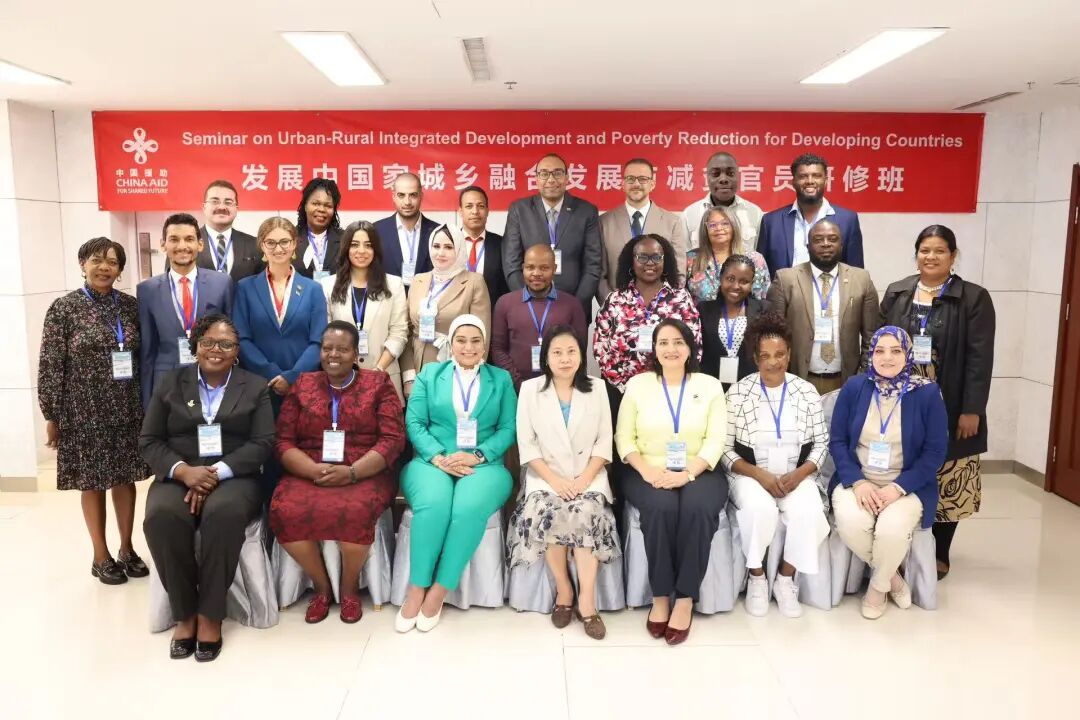
Centered on the theme of "Urban-Rural Integrated Development and Poverty Reduction", the seminar featured thematic lectures and cultural experiences in Beijing, followed by field visits to Guilin City and Liuzhou city in Guangxi Zhuang Autonomous Region, where the participants visited the projects on industrial development, employment promotion, integration of agriculture culture and tourism, public service, rural construction and governance.

Mr. ALUQEILI MAHMOUD TAYSIR MAHMOUD, Bejate Municipal Government Engineer of the Construction Management Office, Palestine,one of the participants, said, “ The most important lesson I take from China is that sustainable poverty reduction is not only about providing assistance. It is about creating the conditions that enable people and communities to build better lives. This requires connecting farmers with markets, villages with cities, local resources with investment, people with education and skills, and vulnerable groups with employment and essential services. This is where poverty reduction and integrated urban-rural development meet. When rural communities gain better access to markets, technology, investment and public services, the urban-rural gap can become smaller. And when people gain access to education, skills and employment, development becomes more inclusive and sustainable”.
