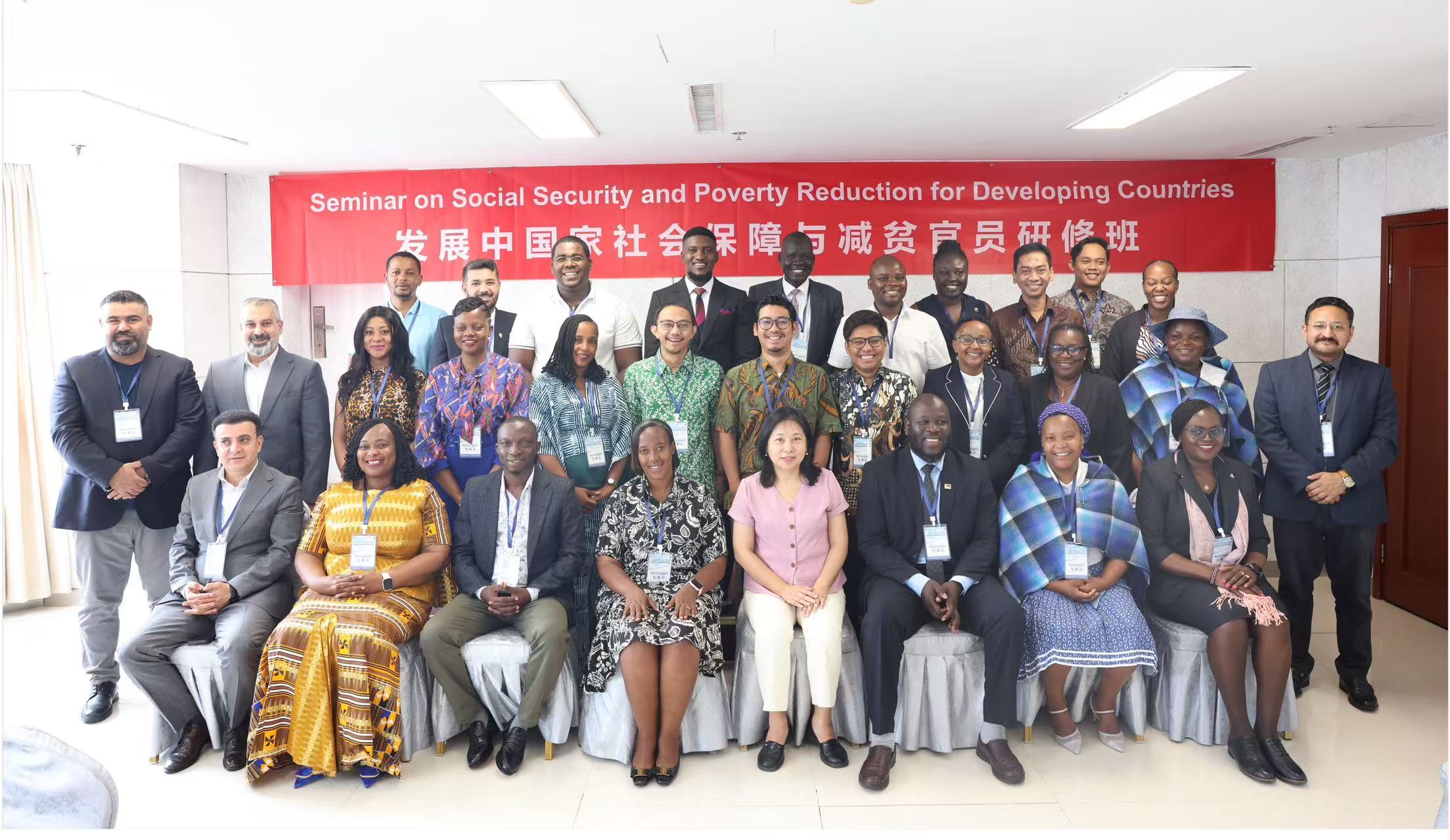
From August 11st to 24th, 2026, the Seminar on Social Security and Poverty Reduction for Developing Countries, organized by the International Poverty Reduction Center in China (IPRCC), was successfully held in Beijing and Gansu Province. The 14-day seminar brought together 29 government officials from 10 countries, Botswana, Cabo Verde, Indonesia, Iraq, Kenya, Pakistan, Rwanda, Sierra Leone, South Sudan, Zimbabwe. Ms.Jie Ping, Deputy Director General of IPRCC, attended both the opening and closing ceremonies and delivered remarks. On behalf of all participants, Ms.Umutesi Dody Hortense, Advisor to the Executive Committee of Musanze District in the Northern Province of Rwanda and Ms.Mavhaya Kebaneilwe, Secretary to the Member of Parliament Kgatleng West and Secretary General for Women's League in Botswana delivered speeches at the opening and closing ceremonies, respectively.
With a focus on ‘Social Security and Poverty Reduction’, the seminar combined thematic lectures and cultural activities in Beijing with field visits to Linxia Hui Autonomous Prefecture, Gansu Province. Through these visits, they gained an in-depth understanding of China's remarkable achievements in rural governance, rural development, industrial development, elderly care services, and health services. They acquired a deeper appreciation of China's approaches to translating distinctive local industries into tangible income growth for residents, transforming grassroots governance into effective public service delivery, and converting coordinated urban-rural development into shared benefits, thereby consolidating the foundation of social security systems.

Ms.Mavhaya Kebaneilwe stated that through systematic seminars and field visits, the participants gained a comprehensive understanding of China's extraordinary journey in economic transformation, agricultural modernization, and rural development, and developed a profound appreciation for the central role of institutional safeguards, policy continuity, and community participation in poverty reduction practices. During their visit to Gansu Province in particular, the participants toured modern agricultural bases, food processing parks, and ecological resettlement villages, where they witnessed firsthand the vivid practices of technology-enabled agriculture, industrial chain value addition, and coordinated ecological governance. They were deeply impressed by the outstanding achievements in rural development, vocational education, and industrial cultivation. The visit deepened their understanding of the close relationship between agricultural development and poverty reduction, and highlighted the importance of reform, knowledge sharing, and investment in creating sustainable opportunities for rural communities. The participants eagerly look forward to building on this seminar as a new starting point to further deepen exchanges and cooperation with China in poverty reduction, trade and economy, and sustainable development, and to jointly contribute to the global cause of poverty eradication.
